

If you’ve never lived in a house which isn’t connected to the mains sewer, you’ve probably never thought about septic tanks. But if you live in a remote, rural area, which isn’t connected to the mains sewage network, you need to think about safe treatment of wastewater from your home. A septic tank is still the most popular way to do this.
So whether you need to replace your existing wastewater treatment system or you are buying a house with a septic tank and aren’t sure what it means, read on to find out more about the benefits and drawbacks of a septic tank…
Septic Tank Definition
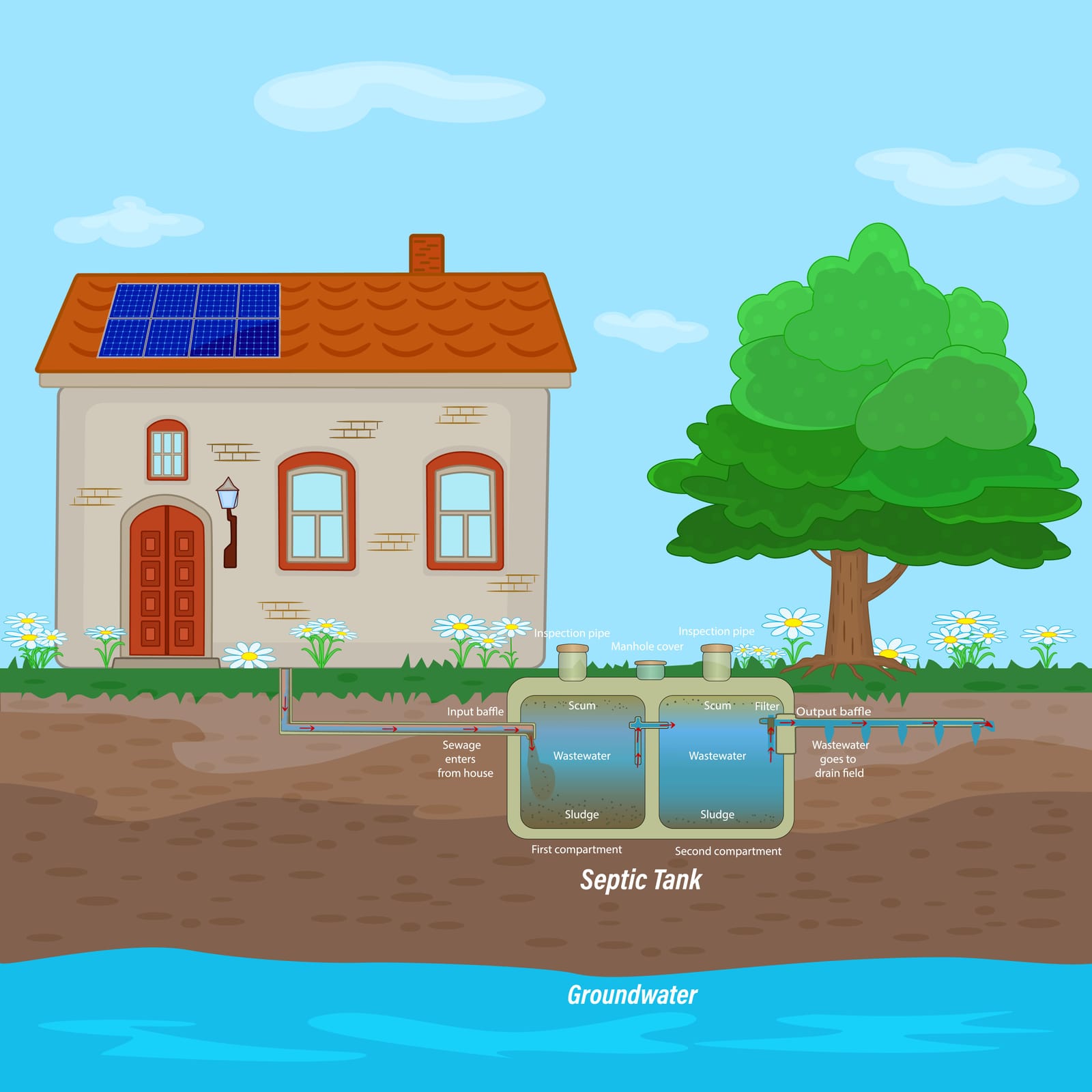
A septic tank is an underground sewage treatment system (generally buried in your garden), which is used to treat wastewater and store any solid waste. Septic tanks are watertight containers made of concrete, fibreglass or plastic.
A septic tank can manage large volumes of wastewater efficiently. It has two pipes – an inlet pipe which receives the water and outlet pipe, which releases it.
A septic tank treats all water from a home or small group of homes – from sinks, showers, baths, toilets, washing machines and dishwashers. (It can also be used for ‘domestic’ water from a small business ie for the same uses as in a home, rather than for industrial processes.)
The inlet pipe transports wastewater from a home or business into the septic tank. It is then stored inside the tank for long enough for solid and liquid waste to separate.
The wastewater will separate into three layers – scum, water and sludge. The scum is mainly oil and grease, which will float at the top of the wastewater. The bottom layer is made up of heavier solids, which form a layer of sludge.
The outlet pipe then slowly disperses the water into the surrounding soil, which is known as the drainage field and is probably your garden. This water is clean and safe enough to release into the ground. It has had the solids removed, and the sludge and scum remain in the tank.
Bacteria will eat away the sewage, but a layer of sludge will remain, which will need to be removed regularly by a registered contractor. This is generally once every year or two, but how often it is done depends on the size of tank and the number of people using it, as well as factors such as whether everyone is out during the day.
Do Septic Tanks Need Maintenance?
A septic tank needs more care and attention from you than the mains sewers do. To ensure it keeps functioning safely for many years, you need to be careful what you flush away and rinse down the sink.
Septic tank users should only flush pee, poo and toilet paper down the toilet, because anything else could cause a blockage. An
other important thing to remember is that using more water than you need (eg doing three small loads of washing in a day rather than one large one or taking very long showers) could overwhelm the system.
A septic tank will need pumping out regularly by a registered contractor. If you top up the bacteria in your tank every month, you can cut the number of pump-outs required. It is also a good idea to arrange regular inspections, including a check of the sludge levels. The tank should have no more than 30% sludge – any more than this and there is a risk of it leaking from the tank and releasing harmful deposits into the ground.
One of the best ways to maintain your septic tank is to ensure the living conditions are right for the bacteria. Using harmful cleaning chemicals can kill off the good bacteria, leaving the sludge to build up more quickly.
A real positive of having a septic tank is that it makes users more environmentally aware – septic tank users are less likely to waste water and less likely to use potentially harmful chemicals than people whose homes are connected to the mains sewer.
If it is well maintained, a septic tank will last for 40 years or possibly even longer.
What Are The Regulations For Septic Tanks?
While most people who aren’t connected to the mains sewer can have a septic tank, there are still some strict rules and regulations to follow.
You may need to apply for building regulations approval and/ or planning permission before installing a septic tank.
You are responsible for the septic tank if you own the property that uses the system, you share the system with other properties (you are jointly responsible) or you are renting the property and it is in your tenancy agreement.
A single septic tank can only deal with the sewage and wastewater needs of a limited number of people. Check with your environment authority for advice: Environment Agency (England); SEPA (Scotland); NRW (Wales); or DAERA (Northern Ireland).
Installation of a septic tank is not permitted in Zone 1 of a Groundwater Source Protection Zone.
Septic tanks can only discharge into a soakaway/ drainage field which complies with Building Regulations or BS 6297:
- Must not be too close to any buildings, boundaries or watercourses
- Must be away from electrical cables or pipework
- Must not be part of a road, driveway or other areas used by vehicles
- Must have passed a series of tests to ensure the soil is suitable for drainage and there’s no risk of contamination to watercourses.
A septic tank must not discharge directly into a watercourse, such as a ditch, stream or river. If you intend to discharge into a watercourse, you will need to install a sewage treatment plant instead.
If it isn’t used and maintained properly, a septic tank can get clogged and cause a back-up in the system. If your toilet is flushing slowly or your sink is draining slowly, it could be a sign of a blockage. If this happens, you need to call in a professional to inspect the system.
Your septic tank and pipes should be buried well, but there is always the small potential for an accident – such as an accident while digging or a tree root growing. If this happens, you could end up with a ruptured pipe and a smelly mess. If the ground close to your pipes becomes unexpectedly wet or you notice a foul smell, you will need to get the damaged pipe replaced as soon as possible before it causes environmental damage.
Who can benefit from having a septic tank?
A septic tank is a waste management system that effectively treats domestic wastewater such as sewage and food waste - using gravity to seperate the liquids from the solids. Having a septic tank installed on your property can offer a number of benefits. This includes - making your property more sustainable and less harmful to the environment, and saving you money on utility bills. With this in mind, let’s look at some of the main properties that can benefit from having a septic tank.
Rural properties
Rural properties face a number of unique challenges due to their remote locations. One of these challenges is that they may not be connected to the main plumbing system. For health and safety reasons, you cannot have a property where there is no system to dispose of solids and waste. So, if you live in a rural property that cannot be connected to the public waste system, you must find an alternative way to manage your waste on-site. One of most effective and low-maintenance ways to treat wastewater is by having a septic tank installed on your property. This will allow you to effectively treat your wastewater on-site, so that it can then be safely discharged back into a drainage field.
New build properties
New build properties can also benefit from having an on-site waste management system. Using a septic tank can help you become aware of your water use and adopt more water efficient habits. This should help reduce water waste and could save you money on utility bills in the long run. Having a septic tank installed on your property could also increase the value of your home when you come to sell. This is because more and more people are becoming concerned about the state of the environment and trying to reduce their carbon footprint by adopting more sustainable, green lifestyles. For that reason, having a septic tank could be a great selling point that makes you stand out from similar properties in the area. Septic tanks are also long-lasting, making them a great investment. Depending on the materials used for your tank, the typical lifespan is between 30 to 50 years, with longer operating times achieved with good maintenance.
Eco-friendly properties
People who are environmentally friendly and wanting to reduce their carbon footprint can benefit from having a septic tank. A septic tank uses natural processes and a basic treatment method that is simple, effective and environmentally friendly. Furthermore, the water being released into the soil will help promote the growth of nearby plants and flowers. Unfortunately, public sewage systems are prone to suffering leaks and other issues which can cause serious harm to the surrounding environment. Managing your waste independently on-site, means you are responsible for maintaining your system and preventing any leaks from occurring. Households with a septic tank also tend to be more conservative when it comes to water use, which helps them to reduce their carbon footprint, as well as their water bills.
What is the alternative?
The alternative to a septic tank at home is a sewage treatment plant. These actually treat the sewage. One of the disadvantages of a septic tank is that they can be quite smelly. A sewage treatment plant is less smelly, because the wastewater it releases is much cleaner. It also needs far less maintenance and emptying than a septic tank.
Septic tanks are cheaper than sewage treatment plants to buy, but the cost difference would be partly offset by the need for less maintenance.
A septic tank is a cost-effective way of dealing with wastewater from homes which aren’t connected to the mains sewage system. If you maintain your tank regularly and don’t flush or rinse away the wrong things, there are few drawbacks and your tank should last for many years.
If you are buying or selling a house with a septic tank, make sure you are aware of exactly where it is on the property, to reduce the potential for any accidents.
Tanks for Everything stocks a range of septic systems, offering a variety of price points and materials. All septic tanks are manufactured to current standards and follow water quality codes of practice. We provide a variety of septic tanks from trusted distributors such as Marsh Industries, Clearwater and Klargester.