

If you are buying a property which isn’t connecting to the mains sewage system, or you need to replace or upgrade your existing wastewater treatment solution, it is important that you understand all of the options available to you.
There are a range of options to treat your wastewater from the kitchen sink, shower, bath, toilet, washing machine and dishwasher at home. The best solution for you is the one which complies with the law, fits into the space you have available and suits your budget.
Your sewage treatment at home must only discharge domestic sewage eg from toilets, kitchens and bathrooms, not from any industrial processes you are carrying out at home. Most importantly, it must not cause pollution. There are rules to follow to ensure this doesn’t happen.
The Environment Agency states: “You must use a septic tank or a small sewage treatment plant to treat the sewage and then discharge the wastewater to ground through a drainage field. You must not discharge effluent from a septic tank to a watercourse.
“A drainage field, also known as an infiltration system, is a series of pipes with holes placed in trenches. These are arranged so that the wastewater can trickle through the ground for further treatment.”
It is important to check the latest regulations before making your decision on the best domestic wastewater treatment solution for you, by checking with the Environment Agency in England, SEPA in Scotland, NRW in Wales or DAERA in Northern Island. In some instances, you will have no choice but to install a sewage treatment plant to make sure you comply with the law.
Sewage treatment plant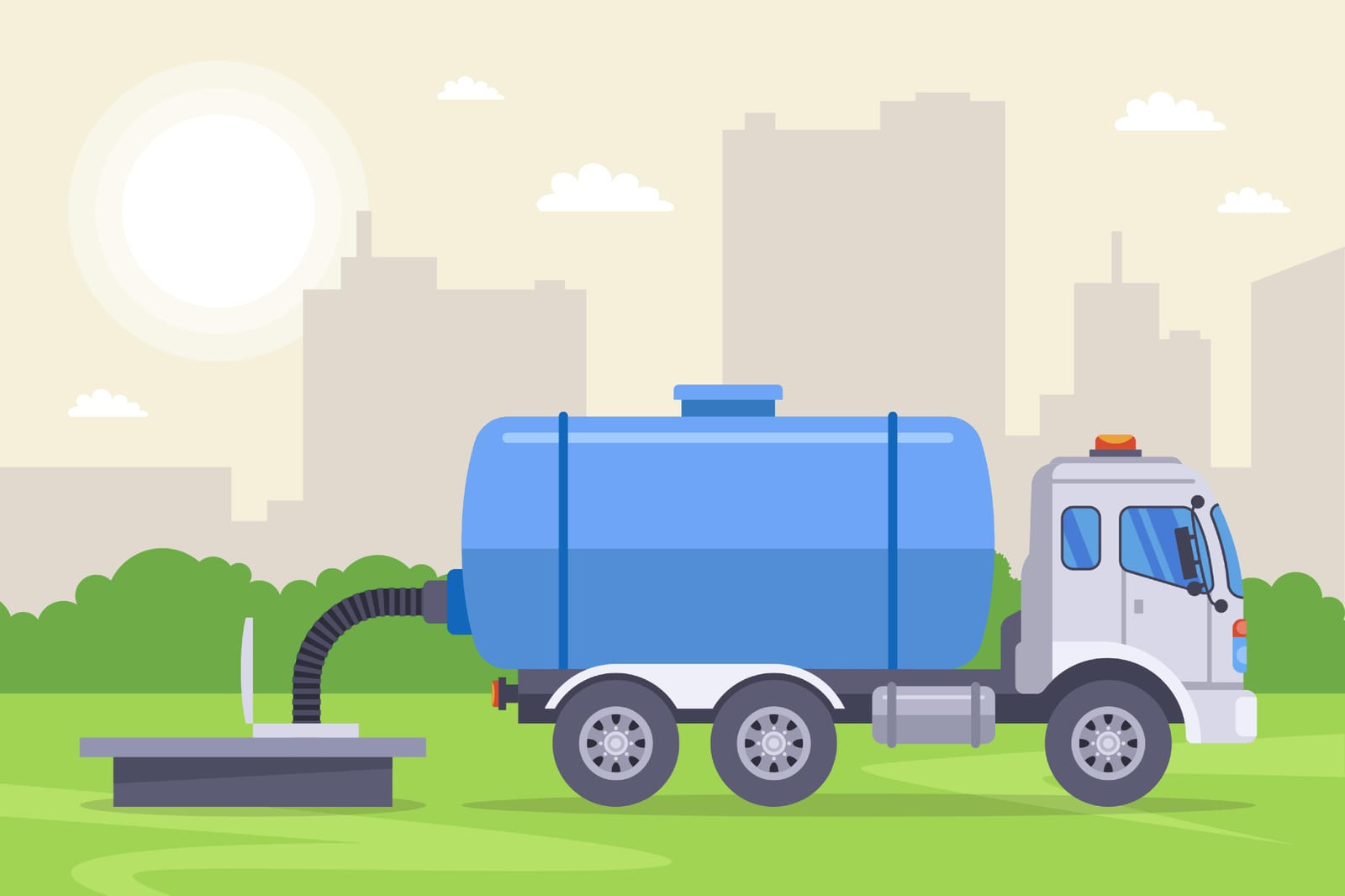
If possible, a sewage treatment plant should be your number one choice for dealing with wastewater and sewage at home, if you’re not connected to a mains sewer.
While they are more expensive than septic tanks, sewage treatment plants actively treat and process sewage and produce an effluent which is safe to discharge into the environment. A sewage treatment plant (sometimes called a packaged treatment plant) is buried underground on your property (most likely your garden).
Sewage treatment plants are significantly cleaner and less harmful to the environment than septic tanks. The waste liquid from your home flows into the sewage treatment plant, where gravity separates it into solids and liquids. In a second chamber, oxygen is introduced through an air pump, which encourages the growth of bacteria, which break down the sewage into a cleaner effluent.
The clean effluent is then discharged into a third chamber, before being discharged safely into the environment. The remaining solid waste is then removed periodically by a registered contractor.
Sewage treatment plants require electricity to run, which means the running costs are higher than other forms of wastewater disposal.
A sewage treatment plant will need servicing about once a year to make sure it keeps running effectively.
We stock a wide variety of sewage treatment plants from trusted distributors, such as Marsh Industries, Tricel and Klargester.
Septic tanks 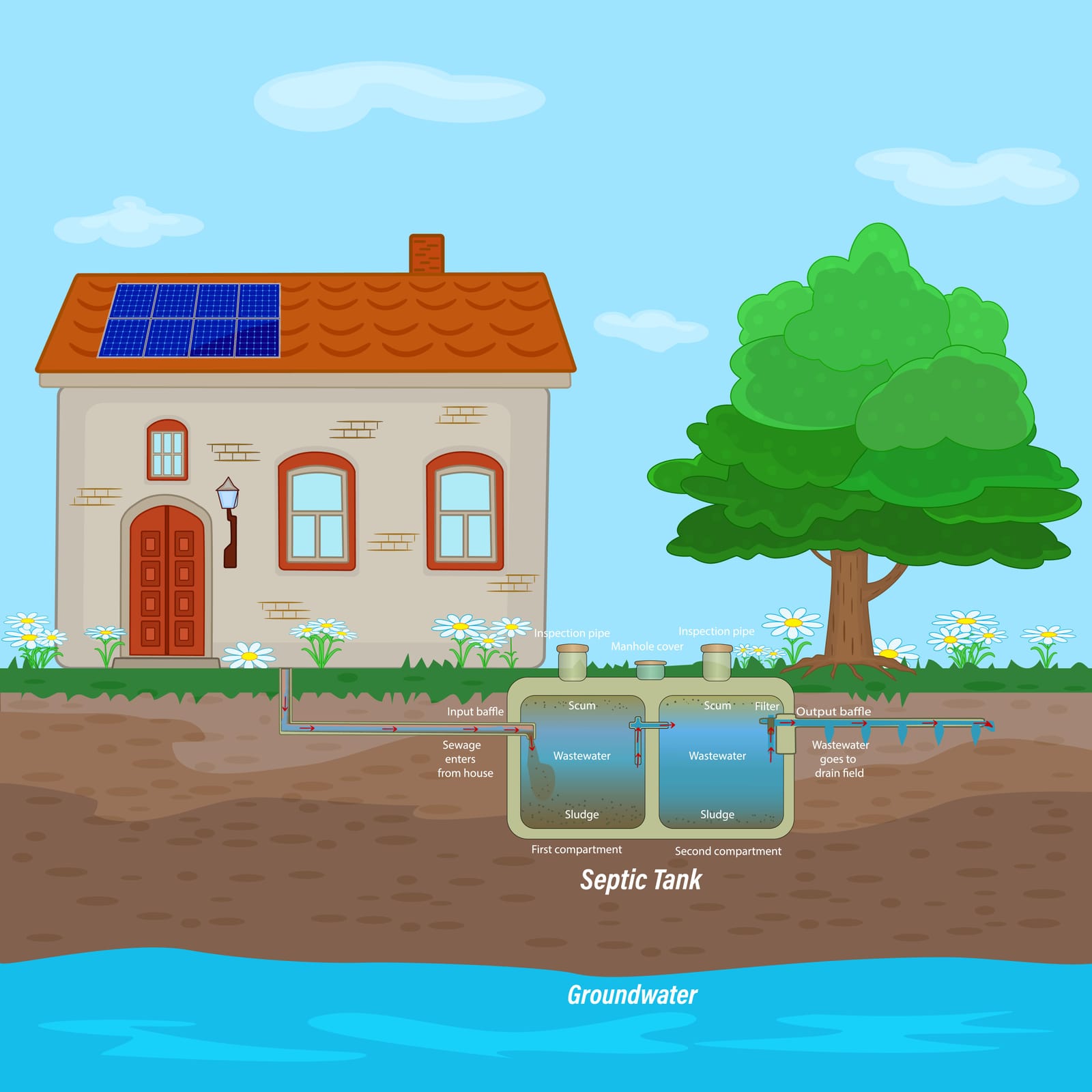
Septic tanks are underground, watertight tanks, which separate liquid waste and solid waste. They are cheaper than sewage treatment plants and are the most popular form of wastewater treatment at home.
The liquid waste from a septic tank flows out of the tank into a soakaway or drainage field (which will generally be part of your garden), where naturally occurring bacteria will break down any remaining waste.
The solid waste sinks to the bottom of the tank, where it forms a sludge. While some of this sludge is broken down by bacteria, the remainder of the solid waste will need to be pumped out regularly by a registered contractor.
In certain situations, the law says you cannot install a septic tank and will need to install a sewage treatment plant instead:
- A septic tank cannot discharge directly into a watercourse eg a river, stream, ditch or lake.
- You cannot install a septic tank in Zone 1 of a Groundwater Source Protection Zone.
- A septic tank can only discharge into a soakaway/ drainage field which complies with Building Regulations or BS6297. This means it must be not too close to any buildings, boundaries or watercourses; away from electrical cables and pipework; not part of a road, driveway or other areas where vehicles drive; it has passed a series of tests to ensure the soil is suitable for drainage and there’s no risk of contamination of watercourses.
Cesspool
A cesspool should be your absolute last choice for dealing with sewage and wastewater. They are actually illegal in Scotland, so anyone in Scotland would need to install a septic tank or sewage treatment plant instead.
A cesspool collects and stores wastewater and doesn’t treat it or filter it to a drainage field, so it requires much more frequent emptying than either a sewage treatment plant or a septic tank.
If you already have a cesspool on your property, you can keep using it and don’t need to register it or apply for a permit. But the Environment Agency or local council can force you to replace it or repair it if it is in poor condition and there is the potential for big fines if you are seen to be breaking the law.
You should use a high-level alarm system to alert you in case of an overspill. Your cesspool should also be regularly emptied by a registered waste carrier.
If you do wish to install a new cesspool, it must be at least seven metres from any buildings and two metres from a boundary. You will also need to get planning permission from your local council.
Whether you install a sewage treatment plant, septic tank or cesspool, it is important to choose the right one. You need to consider your budget, including the initial outlay and the running costs (eg maintenance and emptying by a registered contractor).
You also need to install the right sized system for your home. This is based on the capacity of the house, not on the number of people currently living there. Tanks for Everything stocks domestic sewage treatment plants for four to 12 people.
A three-bed house should have a tank capable of dealing with the waste of five people. For each additional bedroom, you should add one person. So a five-bed home should use a sewage treatment plant suitable for seven people. A 12-person sewage treatment plant could be shared between two four-bed properties.
A cesspool needs to have a minimum capacity of 18,000 litres for two people, with an extra 6,800 litres for each additional occupant.
With cesspools already illegal in Scotland and far cleaner solutions available, it makes sense to choose one of the other domestic sewage treatment solutions.