

Storing oil underground is a popular choice for homes or businesses with limited outdoor space – or who don’t want to ruin the appearance of their property.
Underground can be used to store a range of fuels, including domestic and commercial heating oil and diesel for back-up power generators.
While storing oil underground isn’t particularly common, underground oil tanks do have their advantages. If there are lots of vehicle movements on your site, there is a risk of an outdoor tank being hit by a car, van or lorry. With the tank underground, this risk is completely eradicated. The risk of a spill or damage to the tank due to physical damage is also massively reduced.
Only oil tanks which are specifically designed and constructed for underground use should be buried either partially or wholly underground. The special design of underground oil tanks allows them to withstand the pressure exerted on the outside of the tank when it is empty.
But there are still risks to your property, health and the environment from an oil spill from an underground oil tank. Accidental leaks could prove very costly to the environment and clean-up costs can be very expensive to you or your business.
Before installation, you should get in touch with your insurance company, to get their view on how the location of an underground oil tank cold affect your buildings and contents insurance.
If an underground oil tank is your only option, it is important to follow all these steps before ordering, to ensure it is safe and legal to use.
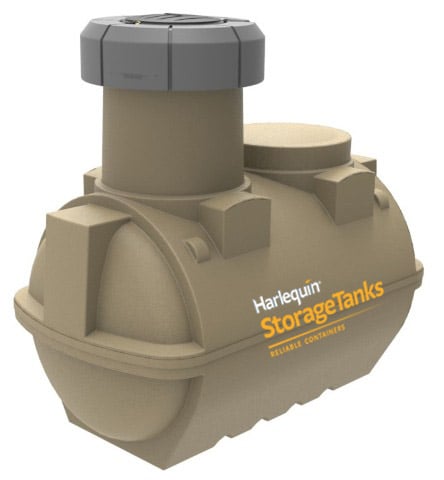
Planning permission
Before installing an underground oil tank, you need planning permission from your local council for the tank and any equipment connected to it.
It is likely you will need to send an environmental risk assessment with your planning application.
The risk assessment should say how close the tank will be to:
- Local watercourses
- Sensitive groundwater locations
- Public and private water abstraction points
- Environmentally sensitive areas eg sites of special scientific interest
If your plans could negatively affect the environment, including the potential for groundwater pollution, the council may consult with the Environment Agency. The Environment Agency may then require specific controls in your plans to protect the environment or may even object to your plans.
The Environment Agency will particularly want to see you have environmental controls in place if the groundwater is sensitive or vulnerable to pollution, in a groundwater source protection zone or shallow at the proposed location of your underground oil tank.
If your tank is in a groundwater source protection zone, you may need to take more measures to reduce the risk of pollution. Go to Gov.uk for more details.
Design and site selection
You need to carefully design your installation and select the site to reduce the potential for groundwater pollution and health and safety risks. You should consult the Environment Agency on the location of your tank before you install it.
Before installing an underground oil tank, you must consider:
- The site’s environmental suitability
- Tank design
- Tank contents
- Pipework
- Materials used to construct the tank and pipework
- Environmental measures you will use
When considering the site selection of your tank, your risk assessment should take into account:
- Proposed site layout and equipment needs (both above and below ground)
- Geology and hydrogeology of the site
- Historic site activities (including any existing underground oil storage tanks)
- Whether the ground needs a specific type of foundation
- How corrosive the soil is
- Groundwater conditions, including depth and seasonal variations
- Where surface water will drain to
You should also ensure you have sufficient space for delivery vehicles to be able to unload and manoeuvre easily.
The tank
Your underground oil tank should be bunded (double skinned). It should be made of either double-wall steel or double-wall reinforced plastic. If your tank is made of steel, the Environment Agency may require you to install effective anti-corrosion measures.
The tank should have a class 1 or 2 leak detection system which meets European standard EN13160. The leak detection system will alert you if the inner skin of your tank fails.
Your underground oil tanks should also have overfill protection and an access chamber, which will contain any leak or spill until you can safely clean it up.
Pipes should meet British Standard BS EN 14125 and be suitable for the particular model of underground storage tank. They should:
- Be strong enough to cope with internal and external pressures
- Be strong enough for handling and loading
- Be compatible with the materials they are carrying and any other materials they may come into contact with eg through the ground
- Have correctly formed and sealed joints, ideally with as few joints as possible to minimize corrosion risk
Where possible, pipes should be installed above ground. If they need to be buried, pipes should be double skinned with interstitial monitoring, which will alert you to leaks before any product leaks into the soil.
It shouldn’t be possible to overfill the tank. It is important to use automatic shut-off valves or electronic alarms to limit the amount of fuel delivered into the tank.
Safe installation
Installation of an underground oil tank should always be carried out or supervised by an OFTEC registered engineer. An OFTEC registered engineer can ensure that the installation is compliant with building control and can sign off the works to the tank for building control purposes.
Underground oil tanks should be encased in concrete and located a minimum of two metres away from any vehicle movement or parking areas. It is important to follow manufacturer’s instructions for the safe installation of your underground oil tank, especially around the maximum depth and the amount of concrete used.
The tank should be well away from plants or trees with roots which could cause damage to the tank.
During installation, you must:
- Make sure protective coatings applied to the tank and pipeworks aren’t damaged
- Inspect protective coatings during and after installation
- Repair any damage to protective coatings immediately and before the excavation is filled back in
You should also make sure that all of these things are correctly installed and secure against leaks and spills:
- The tank
- Pipes
- Leak detection system
- Fuel dispensers
- Delivery areas
- Drainage system – including oil separators
Carry out checks
Quality checks should be carried out and certified by the OFTEC registered engineer before you use the tank.
Before using the tank, you should:
- Check all valves, pipes and vent pipes are clearly identifiable
- Test drainage systems
- Seal electrical and other ducts
- Make sure forecourt areas are completed
- Make sure emergency equipment is installed and ready to use
- Test the integrity and safety of the tank, pipes, fuel dispensers and manhole chambers
Installing an underground oil tank is not an easy option, but if you follow these points carefully you should have an oil tank which will be safe and effective for many years to come.
An OFTEC registered engineer will help you comply with the law and make sure the tank works for your needs. They will look for sensitive groundwater areas, nearby watercourses, loose fitting manhole covers, wells, boreholes or a high water table – all of which could be affected by your underground oil tank.